
What is 3D Rendering and Who Needs It?
3D rendering bridges the gap between imagination and reality, enabling architects, designers, and marketers to showcase their concepts in photorealistic detail. In the building industry, from architectural companies to real estate developers, 3D architectural rendering is a 3D service for anyone looking to provide a vivid and accurate representation of projects with quality control before they become a reality.
Architects and designers rely on high-quality renders to visualize their architectural plans, ensuring that every detail is well-presented. Marketers use these stunning visuals to create compelling campaigns that attract potential buyers and investors. The ability to produce lifelike images that reflect the final product not only enhances understanding but also reduces the risk of costly errors and redesigns.
In this way, 3D architectural rendering plays a pivotal role in real estate and architecture.
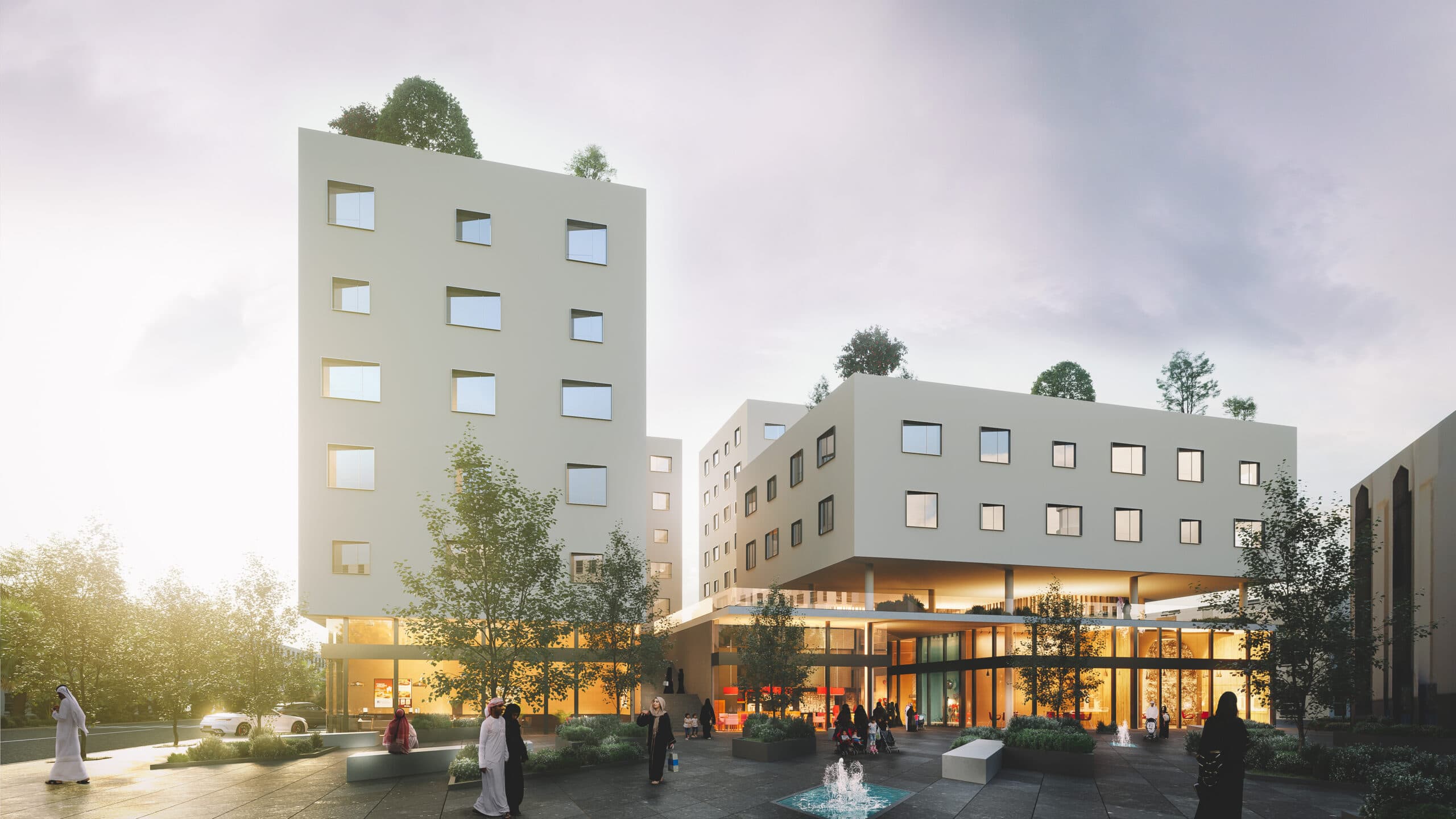
SAFA in Jeddah, Saudi Arabia / Architecture: PARALX / Exterior architectural rendering crafted by RNDR
#1 Overview of 3D Rendering in Real Estate and Architecture
Architectural companies and real estate developers outsource 3D rendering to create visual representations that help clients see the final product long before construction begins. These 3D rendering services are valuable in ensuring that all stakeholders have a clear understanding of the project, thus reducing costly errors and revisions during the construction phase. By producing lifelike images of properties, 3D rendering enables clients to visualize designs and make informed decisions, which is essential for pre-sale and marketing efforts.
This fusion of 3D technology and design not only elevates the presentation of architectural projects but also offers a cost-effective way to make design modifications, thereby avoiding expensive changes during the actual construction.
#2 Common Use Cases: Pre-Sales, Marketing, and Design Visualization
Very often, part of the design budget is allocated to marketing efforts, and 3D renderings are included as a regular project cost because they bring value. 3D rendering is frequently employed in marketing campaigns to create realistic visualizations that attract potential buyers and investors. High-quality images serve as a marketing tool, enhancing property listings with attractive CGI imagery and virtual tours that captivate potential buyers.
In pre-sales, these photorealistic images craft immersive visual stories that help clients envision the final product, making them more likely to commit to a purchase.
#3 Outsourcing 3D Rendering versus In-House Artists: How to Access Specialized 3D Rendering Skills
Architectural firms can benefit from outsourcing 3D rendering during peak times or when there are temporary shortages of in-house talent, thereby ensuring the smooth continuation of projects. It also supports large projects with tight deadlines, helping an architectural firm meet urgent demands without overburdening their in-house staff.
Oftentimes, rendering needs in real estate and architecture are periodic, so it makes more sense to outsource 3D rendering services instead of creating an in-house artist team.
Access to specialized skills via outsourcing can lead to advanced 3D visualizations, virtual tours, and animations, setting projects apart from the competition through visual wizardry. Seasonal fluctuations in project volume can be managed efficiently by scaling resources up or down as needed, ensuring that firms can handle varying workloads with a large workflow without compromising quality. This diverse skill set allows for greater flexibility in project execution.

Living at Kloos Alblasserdam, Netherlands / Architecture: FSD x Bosch und Slabbers x Van Aken / Exterior 3D architectural rendering created by RNDR
The Hidden Costs of an In-House Team for 3D Rendering
Maintaining an in-house team for 3D rendering can seem like a straightforward solution, but it often comes with hidden costs that can impact your project’s overall budget and timeline, including:
- Recruiting and training rendering artists
- Investing in the latest software
- Investing in high-performance hardware
- Periodic need for renderings on select projects
These challenges highlight why many architects and developers are looking beyond their in-house teams and choosing to outsource 3D rendering services for such projects. Outsourcing not only helps to mitigate these hidden costs but also provides access to 3D expertise and technology without requiring significant upfront investments.
Let’s delve into the specific financial and operational burdens of in-house rendering and how outsourcing can offer a more efficient and cost-effective solution.

Mumbai University in India / Design: Foster + Partners / Interior 3D architectural rendering created by RNDR
#1 Salaries, Software, and Hardware Overhead
One of the most significant costs of maintaining an in-house rendering team includes:
- Salaries of skilled 3D designers
- Software licenses for essential tools like Autodesk 3ds Max, amounting to approximately $1,875 per user annually
- High-performance hardware, which requires ongoing investment in upgrades and maintenance
These cumulative expenses make in-house rendering less appealing compared to the costs involved with the potential savings offered by outsourcing to an external 3D business.

Kloos Alblasserdam, Netherlands / Final design: FSD x Bosch und Slabbers x Van Aken / Bird’s-eye view 3D architectural rendering created by RNDR
#2 Workflow Bottlenecks and Scalability Challenges
In-house rendering teams often encounter workflow bottlenecks due to inefficient processes and limited resources, leading to significant delays and increased project costs. Complex rendering projects can require weeks of iterations, delaying marketing campaigns and frustrating clients and businesses. Additionally, software limitations can hinder the ability to execute complex architectural designs effectively, further compromising the quality of the visualizations.
Outsourcing alleviates these issues by providing access to specialized external providers who can manage urgent and complex rendering projects, ensuring that deadlines are met without compromising the level of delivery for your business. By leveraging the expertise of dedicated 3D professionals, firms can enhance visual quality and avoid operational strains.

Private house in Melbourne, Australia / Design: CBA / 3D architectural rendering crafted by RNDR
Why Top Architects and Developers Choose to Outsource
Top developers are increasingly choosing to outsource 3D rendering services for several compelling reasons:
- Outsourcing enables companies to significantly reduce costs by eliminating the need for internal infrastructure, expensive software, and skilled personnel.
- It enables developers to focus on core competencies.
- Leveraging specialized services for advanced visual content enhances overall efficiency and project outcomes.
This strategy saves money and provides access to a broader talent pool and resources not available internally. Outsourcing partners bring extensive experience and cutting-edge technology to the table, which allows developers to access high-end visualizations without the heavy lifting.
Let’s explore the advantages that make outsourcing an attractive option for top architects and developers.
#1 Flexibility and On-Demand Expertise
3D rendering outsourcing provides several benefits for development and architectural firms:
- Flexibility to adjust 3D rendering resources quickly according to project cost and demand without the burden of hiring permanent staff.
- Ability to manage fluctuating demands effectively, ensuring acceptance of more projects without overwhelming existing resources.
- Collaboration with specialized 3D rendering providers helps maintain project timelines during periods of high workload or temporary unavailability of internal staff.
By leveraging the 3D experience and specialized expertise of the right company, firms can significantly enhance project outcomes. It also provides immediate access to high-quality talent and powerful computers, leading to faster project completion and improved efficiency.

Vondel en Zwaan in Netherlands / Architecture: FSD x Rijnboutt / Exterior 3D architectural rendering created by RNDR
#2 Access to Global Talent and Diverse Styles
3D rendering outsourcing opens the door to a diverse array of artistic styles and cultural perspectives from professionals around the world. This global talent pool ensures access to specialized skills that may not be available locally, leading to superior project outcomes. By tapping into a worldwide network of skilled 3D artists, developers, and architectural firms can enhance their project presentations with top companies around the globe.
#3 Faster Turnarounds with Dedicated Teams
Dedicated outsourcing teams offer several advantages:
- They are equipped to streamline workflows, significantly improving the turnaround time and overall speed at which projects are completed.
- External vendors typically possess the necessary resources and experience to expedite project completion for time-consuming 3D rendering orders, ensuring particular rendering needs and deadlines are met efficiently.
- Specialized teams focusing solely on rendering tasks enable companies to meet expedited turnaround times and tight deadlines, responding quickly to market demands.
- 3D rendering companies ensure professional outcomes for rendering projects.
Using external professionals for rendering can significantly reduce the overall project timeline, enhancing a company’s ability to manage seasonal workload fluctuations and meet client expectations with the highest quality.

Private villa in Ibiza, Spain / Design: Desarrollos Vista Alegre S. L. / Villa 3D architectural rendering created by RNDR
What Property Developers and Architectural Firms Should Look for in an Outsourcing Partner
Choosing the right outsourcing partner for developers and architecture firms is crucial for achieving high-quality results in 3D rendering projects. Identifying a reliable partner who can deliver on your specific needs requires careful consideration of several key factors, including clear communication, a strong portfolio, and other aspects that matter to your project’s success. Establishing a long-lasting collaboration with the right company can significantly enhance the efficiency and success of your rendering projects.
When evaluating potential partners, it’s essential to look for:
- A portfolio that demonstrates their ability to deliver work aligning with the project’s scope and clients’ quality requirements.
- Effective communication skills to ensure both parties remain aligned on expectations and project goals throughout the collaboration.
Let’s explore these aspects in more detail.
#1 Quality Standards, Communication, and Portfolio
A strong portfolio showcasing relevant past work is a clear indicator of a partner’s ability to deliver quality and precision in their 3D rendering services. This ensures that the final renderings meet the high standards expected by clients and stakeholders.
Effective communication is essential in outsourcing to prevent misunderstandings and ensure that project expectations are met. Clear communication processes and the ability to work with the most suitable file formats are crucial for seamless collaboration.
Additionally, thorough research into a vendor’s reputation through online reviews can provide valuable insights into their reliability and client satisfaction, ensuring high-quality results and complete satisfaction through project quality assurance.
#2 Time Zones, Deadlines, and Revision Policies
Understanding time zone differences is crucial for streamlining collaboration and ensuring timely project updates between partners, particularly during working hours, as well as accommodating international times. This setup enables continuous work without downtime, thereby enhancing project efficiency and ensuring that strict deadlines are consistently met.
Clear revision policies should be established upfront by a client manager. Many outsourcing partners offer a limited number of revisions as part of their pricing structure, which helps manage client expectations and prevents confusion regarding quality control.
Setting specific revision policies and fixed deadlines at the beginning of the project ensures a smoother collaboration, helps monitor workflow efficiency, and allows for timely adjustments throughout the rendering process to track progress. By establishing these guidelines, you can ensure that the final results meet your standards and are delivered within the agreed-upon timeframe.

Kids toys, Germany / 3D architectural rendering created by RNDR
Conclusion: Building Bigger with Less Overhead
Choosing to outsource 3D rendering not only helps firms save time and money but also provides access to a global talent pool, diverse styles, and advanced technologies. This strategic move enhances the overall quality of architectural renderings, ensuring projects are completed on time and meet client expectations and market demands.
In summary, 3D rendering outsourcing presents numerous advantages for developers and architects, including cost savings, flexibility, access to global talent, and faster project turnarounds. By mitigating the hidden costs and operational challenges of the internal rendering team, firms can focus on their core competencies and achieve high-quality results that meet client expectations. Embracing 3D rendering outsourcing is a strategic move that can elevate your business and help you build bigger and better projects with less overhead.
Looking to Outsource 3D Rendering Services to Experts?
Get started by clicking below and don’t hesitate to let us know your rendering needs.
