
Introduction to 3D Architectural Rendering Pricing and Architectural Visualization Services Cost
Do you wonder how much 3D architectural rendering services cost and what determines these prices? This guide will break down the various factors that influence render pricing, giving you a clear understanding of what you can expect to pay for different types of 3D visualizations. From project complexity to the level of detail required, we cover everything you need to know to budget effectively.
What is 3D Architectural Rendering?
3D rendering is the process of transforming 3D models into images using computer graphics. Depending on the techniques, this technology can produce photorealistic effects or stylized visuals. The rendering duration can range from fractions of a second to several days, depending on the scene’s complexity. Various methods, such as wireframe rendering, polygon-based rendering, scanline rendering, ray tracing, and radiosity, are utilized to achieve different visual outcomes.
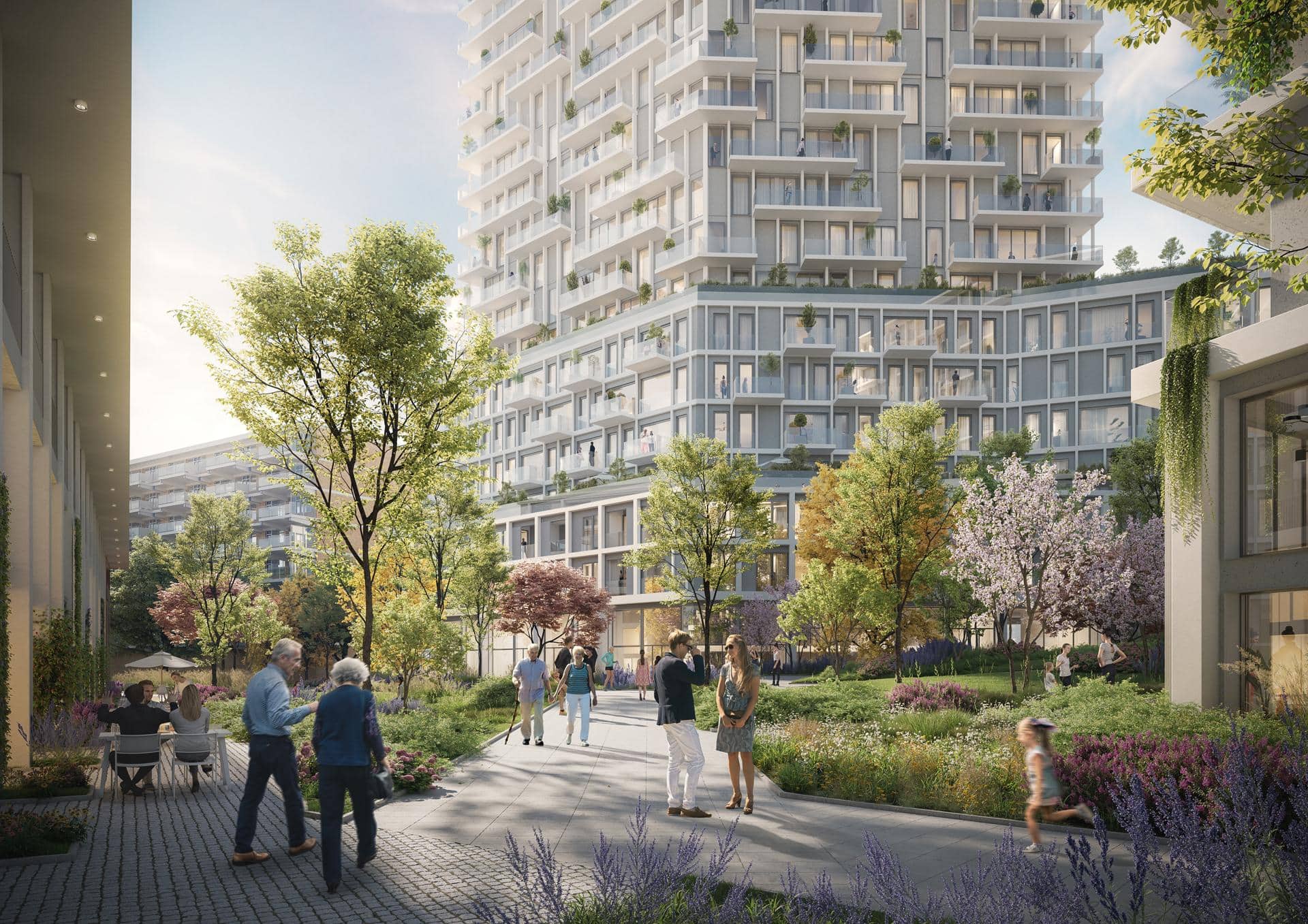
Living at Vondel en Zwaan, Netherlands / Real estate developers: FSD x Rijnboutt / 3D housing rendering leverages project presentation, created by RNDR created by RNDR
Overview of Its Applications and Importance of 3D Renderings
3D rendering enhances marketing effectiveness by providing visually engaging and realistic architecture or product images that improve customer engagement and decision-making. In architecture and interior design, 3D rendering allows for the realistic visualization of projects, aiding clients in understanding design outcomes and making informed decisions. E-commerce platforms use 3D rendering to enhance shopping experiences by offering detailed product views and interactive features that facilitate customer decision-making.
Moreover, 3D rendering plays a crucial role in product design by enabling quick prototyping and iterative design processes, which help identify issues before production starts. Cost savings are another key advantage, as 3D rendering eliminates the need for physical prototypes and expensive studio setups.
The flexibility of 3D rendering allows designers to easily modify materials and colors, enabling rapid adaptation to market trends and customer preferences.
Why Invest in Architectural 3D Rendering?
Investing in architectural 3D rendering allows organizations to create convincing visuals for various purposes, from marketing to architecture presentations. It enhances communication and clarity throughout the design process, making it an invaluable tool for various stakeholders.
#1 Benefits of High-Quality 3D Architectural Visualizations
With architectural 3D visualization, users can achieve perfect lighting conditions regardless of the external weather. This technology allows for easy modification of rendered images, facilitating changes without the need for new photography. High-quality 3D visualizations create lifelike representations, allowing clients to better understand and visualize the final product and project. These visualizations also enable the showcase of dimensions and present the look and feel of the future space, enhancing accuracy in architectural projects.
Presenting architectural plans through 3D visualization allows architects to expand their client base, making it easier to collaborate with clients located in different regions. These visualizations facilitate project approval by presenting a comprehensive view, enabling clients to identify changes early in the process. High-quality 3D renderings are essential for producing marketing materials that effectively showcase properties, especially those still under construction.
#2 How 3D Rendering Enhances Marketing, Design, and Sales
High-quality 3D renderings enhance architectural design presentations and real estate marketing materials, making them stand out in a competitive market. architectural 3D visualization helps maintain consistent branding and color schemes across marketing materials. High-quality 3D renders improve communication by providing clients and stakeholders with clear visualizations of complex projects and architectural drawings. High-quality visualization projects accelerate regulatory and investor sign-offs by bridging the gap between technical intent and stakeholder understanding. Websites that feature architectural 3D visualizations can improve their search engine ranking by increasing visitor engagement through visual data.
3D visualization projects significantly improves real estate marketing strategies by creating engaging virtual tours that attract potential clients without the need for physical visits. Customizable products can be showcased through 3D renderings, allowing consumers to visualize various modifications easily. Moreover, realistic images enable users to explore products in detail, which can enhance their purchasing intent.
High-quality renderings create a positive impression and instill confidence in potential buyers or investors.

Senior housing project, Croonhoven, Netherlands / Developer team: Bemog Projektontwikkeling / Senior living architectural visualization created by RNDR
How Much Does 3D Architectural Rendering Project Cost?
The cost of 3D rendering varies widely based on factors like project intricacy, studio location, and required quality. Still images are generally cheaper than 3D animations or virtual walkthroughs. Most 3D rendering services are priced on a per-image basis, meaning each unique rendering counts as one image. The average price range for 3D rendering services can range from $400 for simpler projects to $10,000 for high-end renderings.
#1 Architectural Rendering Cost: General Price Ranges for 3D Rendering Services
Architectural rendering costs are driven by complexity, realism, number of views/type, project scope, and timeline. Basic renderings usually start around $199 and cover simple exterior or interior views with minimal detail. Average costs for top-notch, photorealistic images typically fall between $700 and $1,500. Typical prices for 3D exterior renderings for residential projects range from $400 to $1,500. For commercial building 3D exterior renderings, costs can range from $1,000 to $10,000.
- Budget studios usually offer final images for $250 to $800 but may compromise quality and communication.
- $800 and $2,000 per rendering for mid-range studios
- $2,000 to $10,000 for high-end studios, characterized by their extensive experience and resources
Prices for architectural rendering vary by provider’s location, with US/Western Europe rates ranging from $100 to $225+ per hour, and Eastern Europe/Asia rates from $30 to $80 per hour. The average hourly rate for 3D rendering services generally lies between: $50 and $150 for basic services.
#2 What You Can Expect at Different Price Points and Architectural Rendering Quality
Lower-end renderings, priced under $200, often come from studios in countries like Bangladesh and the Philippines but may result in lower quality. At the high end of the spectrum, high-end studios can charge upwards of $5,000 for complex and high-quality renderings. Quality and photorealism of renderings can vary significantly even within the same price range, affecting client expectations.
Higher architectural rendering costs generally correlate with better image quality, detailed materials and more effective communication. Complex projects usually incur higher fees due to the increased detail and effort required. Basic architectural visualizations typically range from $450 to $650, suitable for small residential projects where high quality isn’t a primary concern.

Shopping malls at Groeneveldselaan, Veenendaal, Netherlands / Clients: Groosman Architecten x Van Schuppen Makelaars / Commercial rendering of shopping malls and office spaces: RNDR
Key Factors Influencing Architectural Visualization Project Prices
Not all renderings cost the same. Various elements significantly impact the cost of 3D rendering, including the project’s size, complexity, and the client’s specific requirements. The cost of 3D rendering is primarily determined by variables such as project intricacy, detail level, realistic materials, scope, timeline, and client revision requests.
#1 Project Complexity and Scene Details
The intricacy of the project directly affects costs, with more detailed scenes requiring additional resources and time to produce. Scenes with higher complexity, such as intricate architecture or detailed environments, significantly increase rendering time and costs. The difficulty of a 3D rendering project greatly influences its price, with simpler designs being less expensive than intricate projects that require extensive detail and multiple components.
Basic projects, such as small interiors or simple exteriors, generally have lower costs due to reduced rendering time and model preparation effort. Larger and more complex projects, like detailed architectural designs or custom interiors, demand higher costs because they require significantly more resources and time to render.
#2 Level of Detail Required
Higher levels of detail in renderings typically lead to increased production time and costs, as they demand more precise modeling like creating custom objects and rendering efforts. Demanding higher levels of detail, such as detailed materials, custom modeling of detailed plans, and advanced lighting setups, can substantially raise the overall project expenses. The degree of detail in a 3D rendering significantly affects its pricing. Higher detail demands more time and resources, leading to increased costs.
Projects that demand photorealistic quality generally incur higher prices due to the extensive work involved in achieving such detail. The requirement for custom elements, like unique furniture or architectural features, can further drive up the costs associated with detailed renderings.
#3 Order Scope, Timeline and Project Deadlines
A project’s overall scope and urgency can elevate costs, especially when demanding timelines necessitate more resources and expedited processes after hours or on weekends. Urgent rush projects may incur a 25% to 50% premium due to required overtime. The project’s overall scope, including the number of views and the timeline for delivery, can influence pricing as larger projects often require more resources. Larger and more intricate projects generally incur higher costs due to the increased detail and effort needed to complete them.
Additional fees may arise if the project scope expands unexpectedly or significant design changes occur during the rendering process. High-quality materials and detailed specifications provided to the 3D studio can streamline the rendering process and help control costs.
#4 Client Revisions and Adjustments
Increased client revisions can significantly add to the cost, as each iteration requires additional time and resources from the rendering studio. Frequent client changes and requests for revisions can also lead to increased costs due to the additional time and resources needed to accommodate those adjustments. Most architectural and real estate visualization projects set a limit on the number of revisions included in the initial quote, with further changes incurring extra charges.
Providing a detailed project description minimizes the need for revisions by ensuring that the rendering team understands client expectations from the start. Clear and specific reference images for design elements and architectural style can help reduce confusion and limit costly back-and-forth adjustments.
Avoiding excessive revisions can help keep costs down, which emphasizes the importance of clear project requirements from the start.

Tapio café at Airport in Helsinki, Finland / Client: SPP Finland / 3D commercial rendering created by RNDR
Pricing Breakdown by Rendering Type
The average price for 3D rendering services vary widely based on the type of rendering, project size, and complexity. Each type of rendering, whether exterior, or interior, has its own pricing models and influencing factors. Providing detailed information ensures you get accurate pricing without additional costs.
#1 Aerial Views and Exterior Renderings: Cost for Architectural and Landscape Visualizations
For residential exterior renderings, prices typically range from $400 to $1,500, while commercial projects can cost between $1,000 and $10,000. Exterior rendering services can range from $600 to $4,000, with most studios typically charging between $800 and $2,500. The cost per rendering usually decreases as the number of images increases within a project, as studios often reuse 3D models.
Aerial shots are often associated with higher costs for exterior visualizations compared to eye-level views due to the additional modeling required. For smaller projects like single-family houses, costs can start around $600, while larger projects like malls and skyscrapers tend to be at the higher end of the pricing spectrum.
#2 Interior Renderings: Price Range for Interior Design and Spaces
Interior rendering prices generally range between $250 and $1,000, depending on the project’s specifics. Interior rendering costs can vary between $400 and over $2,500, with most studios charging between $600 and $1,500. The cost of interior renderings is generally lower for simpler projects, while more intricate designs demand higher prices.
High-end interior rendering services can exceed $2,500, particularly for complex designs requiring significant detail. Smaller projects can start at around $400 for basic interior renderings. The price is influenced by factors like space, size, and design complexity.
Cost of 3D Floor Plan Renderings
3D floor plan rendering prices varies from from $500 to $2,000, influenced by factors such as building size and design complexity. The pricing for 3D floor plan renderings varies significantly based on project intricacy and the professional’s experience.
#1 How Much You Can Expect to Pay for Rendered Floor Plans
Prices for rendered floor plans tend to be lower when included in a package with other renderings, as the same 3D assets can be repurposed. Hiring a professional for a 3D floor plan can cost between $700 and $3,000, depending on the details and size of the house. Freelancers may charge an average of $1,750 for projects, with hourly rates typically ranging from $50 to $150.
The price for 3D floor plan renderings typically ranges from $500 to $2,000, depending on the building size and design complexity. The cost for a single 3D house plan can range from $700 to $3,000, influenced by the complexity and quality of the design. Hourly rates for professional drafting services typically fall between $80 and $130, depending on experience and project requirements.
#2 Common Pricing Models for 2D vs. 3D Floor Plans
2D floor plans are generally less expensive than 3D versions, though they offer lower-quality visualizations. Pricing models for floor plans can differ significantly, with 3D plans typically costing more due to the additional detail and rendering processes involved. Fees for creating 3D floor plans can vary from $0.40 to $3 per square foot, potentially rising to $10 for architectural firms based on the project’s demands.
3D floor plan renderings are generally more expensive than 2D options, ranging from $500 to $2,000 depending on design complexity. Studios often provide discounted rates for 3D floor plans when ordered as part of a package with other rendering services. Different pricing models for rendering services include per image, per package, or hourly rates, catering to various client needs.

HWIII Zitadellenweg in Spandau in Berlin, Germany / Client: Pott Architects / Commercial office buildings 3D rendering created by RNDR
Cost of 3D Architectural Animations
The average cost for producing 3D architectural animation can range from $1,000 to $10,000 per minute, depending on various factors. 3D animations and flyovers can range in price from $5,000 to over $80,000, influenced by factors such as animation length and detail.
#1 Pricing for Architectural 3D Animated Walkthroughs and Flyovers
Architectural 3D animated walkthroughs typically require a more extensive production process, which can drive their costs higher compared to simpler animations. Short animation clips typically cost between $5,000 and $80,000, while longer clips can start at $25,000 and go up based on complexity.
The pricing for architectural 3D animated walkthroughs and flyovers can vary significantly. Short clips cost between $5,000 and $80,000, while longer animations can range from $25,000 to over $80,000, depending on detail and rendering time.
The price for architectural 3D animated clips can vary widely, ranging from $5,000 to over $80,000 for shorter animations. Longer 3D animation clips typically cost between $25,000 and $80,000, influenced by the required detail and rendering duration.
#2 How Animation Length, Rendering Time and Complexity Affect Cost
The length of the animation significantly influences its overall cost, as longer animations demand more production resources production. The final price of 3D animations is significantly impacted by the level of detail and the time required for rendering. High-detail animations, such as realistic characters, necessitate extensive modeling and rendering efforts, leading to higher costs.
Tighter deadlines can escalate costs as studios may need to allocate more resources and work overtime to meet project timelines. The typical cost for 3D animation ranges from $5,000 to $10,000 per minute for standard projects, while intricate animations can rise to $15,000 per minute.
Animation projects with specific customizations or unique character designs can lead to increased expenses due to tailored requirements.
Other Factors Affecting 3D Rendering Prices
Various elements can alter the pricing of 3D renderings, including project size, complexity, and urgency. Studio expertise, software tools, computational resources, output quality, and project deadlines also significantly influence the pricing of 3D renderings.
#1 Studio Quality and Experience: How Expertise Impacts Pricing
The caliber and experience level of a 3D studio directly influences the cost, with high-quality services typically commanding higher fees. A studio’s level of skill and experience often correlates with higher costs, as experienced studios deliver superior quality and efficiency. The expertise and background of a studio can significantly affect pricing, with more experienced studios typically commanding higher fees.
Higher-end studios with extensive experience and larger teams can handle complicated, large scale projects more efficiently, justifying their higher fees. Clients opting for high-end services should expect fast turnaround times along with superior rendered images quality.
#2 Software and Tools for Rendering in House: Premium Tools and Their Influence on Cost
Studio investments in advanced software and tools often lead to higher pricing due to the quality enhancements they offer. Utilizing advanced software and tools can enhance rendering quality but also lead to higher costs due to the need for specialized knowledge and resources. The choice of rendering software can significantly impact the overall cost, as advanced tools with specialized features often come with higher licensing fees.
High-performance hardware, like multiple GPUs, is often necessary for complex rendering tasks, adding to the total expense of 3D rendering order. Premium rendering tools usually demand higher licensing fees, which contribute to the overall pricing of architectural visualization services. However premium tools enable to render in house, which secures the quality.
Using high-quality 3D rendering software can significantly increase costs due to its advanced features and capabilities they offer, which require more time and expertise to utilize effectively.
#3 Quality of Final Output: Low-Resolution vs. High-Resolution Renders
Higher-resolution renders usually involve more resources and expertise, resulting in increased costs compared to lower-resolution options. These costs are typically due to the added time and resources required to achieve detailed and lifelike visuals. The clarity and detail of a architectural 3D visualization are significantly influenced by its resolution. Higher resolutions yield sharper images with more intricate details.
Choosing high-resolution rendering enhances the realism of visuals, but it also demands longer rendering times and may require more robust hardware. Low-resolution renders can produce quicker results but may compromise detail and clarity, potentially leading to a less impactful visual experience.
The balance between high and low render resolutions involves evaluating the visual impact against practical constraints like time and processing power.
#4 Timeframe and Rush Jobs: The Impact of Deadlines on Price
Rush jobs often incur significant surcharges in architectural rendering. Therefore short deadlines typically raise production costs as studios may need to allocate more resources and work overtime to meet urgent requests. Prompt deliveries often lead to elevated prices as studios must allocate additional resources and work longer hours to meet urgent timelines.
When projects are required on a tight schedule, costs tend to increase due to the need for overtime work and expedited processes. Rushing a project often leads to higher prices as firms must allocate additional resources to meet the urgent demands.
Tight deadlines can lead to increased costs as rendering companies may need to allocate more resources and expedite workflows. Clients should communicate their project deadlines early on to accurately assess any potential rush fees associated with the visualization projects.
Billing Models Used by Architectural Rendering Studios
Architectural rendering studios utilize various pricing structures to accommodate different project requirements, ensuring flexibility for clients. Different billing models in rendering can significantly affect client trust and successful rendering project.
#1 Fixed Pricing vs. Hourly Rates
Fixed per image pricing provides a clear total cost for projects, while hourly rates are ideal for projects with changing requirements.
Per-project pricing involves providing details of your project to a company, which then sends a customized quote based on your needs. Most firms include one or two rounds of revisions in their quotes, with additional revisions usually incurring extra costs. Per-image pricing works well for smaller projects where the differences from one project to another are not significant. Understanding flat rate pricing for projects helps clients navigate the cost structures of rendering services. Flat rate pricing for entire projects can range from $1,000 to over $15,000.
Hourly rates are often preferred for business projects to promote transparency and ensure proper compensation for time and expertise. Offering clients a block of hours in advance can enhance trust and manage client expectations regarding project costs. For business-oriented projects, hourly charging is often recommended as it enhances transparency and reflects the designer’s expertise. Offering packages instead of hourly rates can provide clients with clear pricing, reducing uncertainty about project costs.
Upfront payments are advisable for new clients to ensure financial security for the rendering studio.
#2 Package Deals and Custom Quotes
Package deals often offer a flat rate covering multiple images or services, allowing clients to understand upfront costs. Package pricing can simplify client decision-making by providing fixed costs for distinct services instead of hourly rates. Clearly defining the scope and timeline in each package helps manage client expectations effectively.
Many architectural rendering companies offer package pricing, which provides a single cost for all renderings associated with a project, allowing clients to budget effectively. Custom pricing quotes are tailored to a project’s specific needs, considering factors like complexity, number of images, and timeline requirements.
Select studios may provide discounts for larger projects or bulk orders, incentivizing clients to commission multiple renderings simultaneously.
#3 Per Project, or Per Image Pricing
Pricing per image enables clients to manage their budget effectively by selecting the number of renderings needed. Pricing per image can offer clients flexibility while ensuring they only pay for the specific services they need. Establishing clear pricing for projects can promote transparency and help avoid disputes over costs later on.
Architectural rendering firms often charge based on the number of images required, with costs per image typically decreasing as the volume increases. Some studios offer a flat rate for an entire project, which encompasses all images and services needed, providing clients with clarity on total costs upfront.
Charging by the hour is another model used, particularly for projects with uncertain requirements that may evolve during production.
Price Ranges for Different Architectural Rendering Services
Costs for architectural rendering services can range from approximately $400 for simpler projects to around $10,000 for more complex, high-end renderings. architectural rendering firms final cost services can vary widely, ranging from around $400 for small projects to as much as $10,000 for high-end services.
#1 Low-Range Pricing: What to Expect from Budget Studios
Budget studios typically charge between $400 and $800 per rendering, often compromising quality and communication. These budget options often involve small firms with lower-qualified staff in countries with reduced living costs.
While affordable, budget rendering companies may compromise on quality and communication skills, leading to potential issues like inferior image resolution and communication difficulties due to lack of fluent English speakers. They can save money, but significantly extend the delivery process for the entire set of renders.
Low-range services often include limited revisions, typically allowing up to one adjustment per project and not keeping the deadlines. Therefore many budget studios offer competitive pricing.
#2 Mid-Range Pricing: Standard Market Rates for Quality Work
Mid-range studios generally set their prices between $800 and $2,000 per rendering, aiming to balance quality and affordability. The typical cost for architectural renderings in the U.S. ranges from $700 to $1,500 for smaller to medium-sized projects. Depending on complexity and scale, prices for larger 3D rendering projects can escalate to between $2,500 and $10,000.
Hourly rates for architectural rendering are generally between $50 and $150, influenced by the provider’s location and expertise. For 3D exterior renderings of residential properties and large-scale commercial projects, the cost typically falls between $400 and $1,500. Interior rendering project prices usually range from $250 to $1,000, varying based on details and specifications.
#3 High-End Pricing: What You Get from High-End Studios
High-quality visualizations can range from $2,000 to $10,000 per rendering, offering superior quality and faster turnaround times. Premium studios usually set their prices between $2,000 and $10,000 per rendering, focusing on high-quality and complex project requirements. High-quality images are reflecting the complexity and quality expected.
High-end studios typically have unprecedented levels of extensive experience and larger teams, allowing them to handle complicated projects efficiently. Clients opting for high-end services should expect fast turnaround times along, top-notch post-processing, control over each step of the process with superior image quality.
High-end studios often provide thorough communication processes, ensuring all stakeholders are aligned throughout the project. Investing in high-end rendering services is ideal for projects prioritizing top-tier quality and predictable, successful rendering project.
Tips for Budgeting and Selecting the Right Service for Your Needs
Clearly defining your scope of work can help avoid costly revisions and unexpected changes during the rendering process. Effective communication with your service provider is essential to ensure the final renderings meet your expectations. Selecting the appropriate quality level for your renderings can save final costs. Lower-quality images may be adequate in the initial design stages.
Providing a detailed project description, including floor plans and styles, can lead to a more accurate and cost-effective rendering process. Providing reference images and mood boards can help avoid rework and reduce costs. Asset readiness can significantly reduce costs if a clean 3D model is provided instead of requiring the artist to build a model from scratch.
It’s advisable to factor possible revisions into your budget and choose providers that include a reasonable number of modifications in their quotes. Comparing quotes from various architectural rendering providers can help identify the best value for your specific needs and budget.
Final Thoughts on 3D Architectural Visualization Pricing
In the U.S., the price for a 3D interior rendering can range from $400 to $10,000, depending on the project type. Project intricacy, turnaround time, and quality are significantly influence the architectural rendering cost. Freelance 3D modelers typically charge between $25 and $100 per hour, while studio rates generally range from $50 to $250 per hour. Choosing a rendering firm with a good reputation can lead to better quality and potentially lower costs due to fewer revisions.
Architectural 3D rendering can significantly enhance the design industry, with a projected market growth driven by demand for advanced visuals. Reducing the number of images required, avoiding excessive edits, and utilizing pre-made models can help lower rendering costs in a render network foundation.
To sum up, architectural rendering is an invaluable tool across various industries, offering benefits that range from enhanced marketing strategies to improved client communication. The cost of architectural 3D visualization varies widely based on factors such as project intricacy, detail level, and studio expertise. By understanding these factors and selecting the right service for your needs, you can achieve the perfect balance of quality and cost. Invest wisely, and let architectural 3D rendering elevate your projects to new heights.
Looking for Professional Support in Architectural 3D Visualization Project?
Click below to connect with us and submit your project information.
